Welcome to your comprehensive biology midterm review! This guide will help you master key concepts, from cellular respiration to photosynthesis, ensuring success.
Prepare diligently by reviewing vocabulary like polymers and monomers, understanding their roles in building life’s essential macromolecules, and mastering cell division stages.
Focus on eukaryotic cell evolution, membrane transport mechanisms, and the intricacies of cell signaling pathways – crucial for a strong foundation in biological principles.
Biology, the study of life, relies heavily on the scientific method for investigation. This systematic approach begins with observations, leading to a testable hypothesis. Rigorous experimentation follows, employing controls and variables to isolate effects.
Data collected is then analyzed, and conclusions are drawn – supporting or refuting the initial hypothesis. Peer review and publication are vital for validating findings. Understanding these steps is paramount.
Key concepts include distinguishing between qualitative and quantitative data, recognizing independent and dependent variables, and grasping the importance of replication in experiments. The scientific method isn’t a rigid formula, but a flexible framework for exploring the natural world. Mastering this foundation is crucial for comprehending all subsequent biological topics.
II. Basic Chemistry for Biology
Life’s chemistry is built upon fundamental principles. Understanding atoms, their structure (protons, neutrons, electrons), and how they form molecules through chemical bonds (ionic, covalent, hydrogen) is essential. These bonds dictate molecular shape and properties.
Crucially, water’s unique properties – its polarity, high specific heat, cohesion, and solvent abilities – make it indispensable for life. These characteristics support biological processes.
Grasp the concepts of pH, acids, bases, and buffers, as they regulate biochemical reactions. Familiarize yourself with common chemical symbols and formulas. This chemical foundation underpins all biological functions, from macromolecule formation to cellular processes. A solid grasp of these basics will greatly aid your understanding of more complex topics.
A. Atoms, Molecules, and Bonds
Atoms are the basic units of matter, composed of protons, neutrons, and electrons. Their arrangement determines an element’s properties. Molecules form when two or more atoms chemically combine. Understanding valence electrons is key to predicting bonding behavior.
Ionic bonds involve electron transfer, creating ions with opposite charges that attract. Covalent bonds share electrons, forming strong, stable connections. Hydrogen bonds are weaker attractions between slightly positive hydrogen atoms and electronegative atoms.
These bonds dictate a molecule’s shape, which is crucial for its function. Polarity arises from unequal electron sharing, impacting solubility and interactions. Mastering these concepts provides the foundation for understanding biological macromolecules and their interactions.
B. Water’s Unique Properties
Water is essential for life due to its remarkable properties. Cohesion, the attraction between water molecules, creates surface tension and aids in transport. Adhesion, attraction to other surfaces, contributes to capillary action in plants.
Water’s high specific heat capacity stabilizes temperatures, resisting drastic changes. Its high heat of vaporization provides a cooling mechanism through evaporation. Water is a versatile solvent, dissolving polar and ionic substances.
These properties stem from water’s polarity and hydrogen bonding. Understanding these characteristics is fundamental to comprehending biological processes, from nutrient transport to temperature regulation within organisms and ecosystems. Water truly is the ‘universal solvent’ of life.
III. Macromolecules: The Building Blocks of Life
Macromolecules are large organic polymers crucial for all living organisms. These are built from smaller repeating units called monomers. The four major classes are carbohydrates, lipids, proteins, and nucleic acids.
Carbohydrates provide energy and structural support, composed of sugars and starches. Lipids, including fats and oils, store energy, form cell membranes, and act as hormones. Proteins have diverse functions – enzymes, structural components, transport – built from amino acids.
Nucleic acids, DNA and RNA, store and transmit genetic information. Understanding the structure and function of each macromolecule is vital for grasping biological processes at the molecular level. Their interactions drive life’s complexity.
A. Carbohydrates: Structure and Function
Carbohydrates are essential for life, serving as primary energy sources and structural components. They’re composed of carbon, hydrogen, and oxygen, often in a 1:2:1 ratio. Monosaccharides, like glucose and fructose, are the simplest sugars – the building blocks.
Disaccharides, such as sucrose (table sugar), form when two monosaccharides join. Polysaccharides, like starch, glycogen, and cellulose, are complex carbohydrates formed from many monosaccharides.
Starch is energy storage in plants, glycogen in animals, and cellulose provides structural support in plant cell walls. Understanding these structures and their roles is key to understanding energy metabolism and plant biology.
B. Lipids: Types and Roles
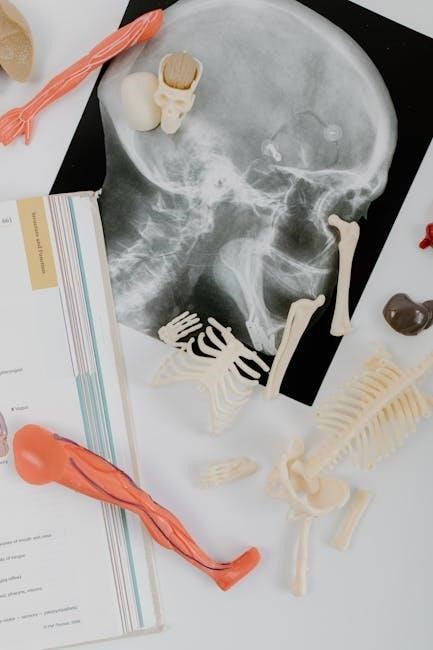
Lipids are a diverse group of hydrophobic molecules crucial for energy storage, structural components of cell membranes, and insulation. Triglycerides, composed of glycerol and three fatty acids, are primary energy reserves.
Phospholipids, containing a phosphate group, are vital for forming the lipid bilayer of cell membranes. Steroids, like cholesterol, play roles in membrane fluidity and hormone production.
Saturated fats have no double bonds, while unsaturated fats contain them, influencing their state at room temperature. Lipids provide more energy per gram than carbohydrates, making them efficient energy stores. Understanding lipid structure dictates their diverse functions within biological systems.
C. Proteins: Amino Acids and Protein Structure
Proteins are complex macromolecules constructed from amino acid monomers, linked by peptide bonds. Twenty different amino acids combine to form a vast array of protein structures and functions.
Protein structure has four levels: primary (amino acid sequence), secondary (alpha helices and beta sheets), tertiary (3D folding), and quaternary (multiple polypeptide chains). This intricate folding is crucial for protein function.
Proteins catalyze reactions (enzymes), provide structural support, transport molecules, and act as hormones. Denaturation, caused by changes in pH or temperature, disrupts protein structure and function. Understanding protein structure is key to understanding biological processes.
D. Nucleic Acids: DNA and RNA
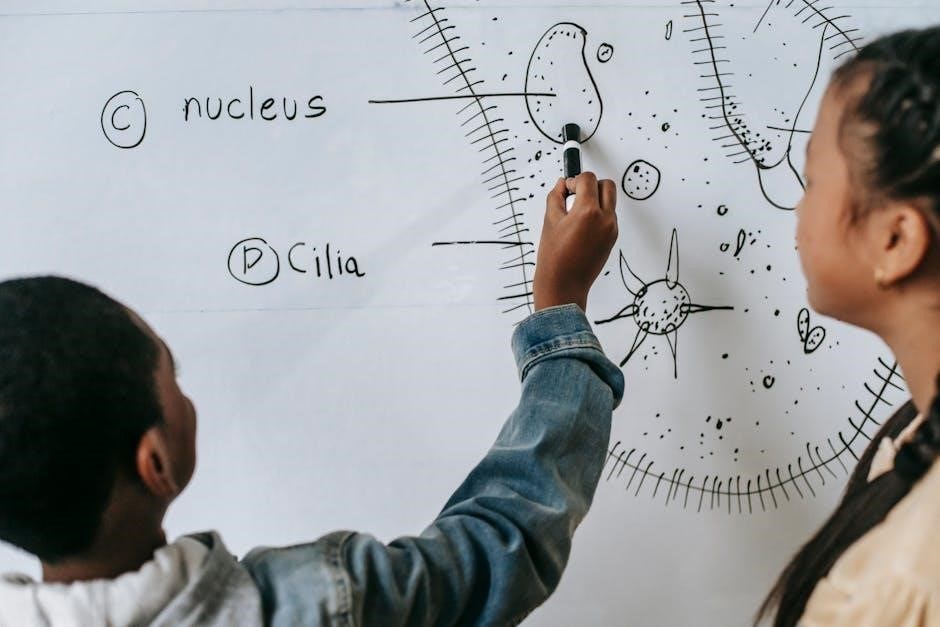
Nucleic acids, DNA and RNA, are essential macromolecules responsible for storing and transmitting genetic information. They are polymers of nucleotide monomers, each comprising a sugar, phosphate group, and nitrogenous base.
DNA (deoxyribonucleic acid) is a double-stranded helix containing the genetic blueprint, utilizing bases adenine (A), thymine (T), guanine (G), and cytosine (C). RNA (ribonucleic acid) is typically single-stranded, using uracil (U) instead of thymine.
DNA directs protein synthesis through RNA intermediaries. RNA types include mRNA (messenger), tRNA (transfer), and rRNA (ribosomal). Understanding the structure and function of these nucleic acids is fundamental to comprehending heredity and gene expression.
IV. Cell Structure and Function
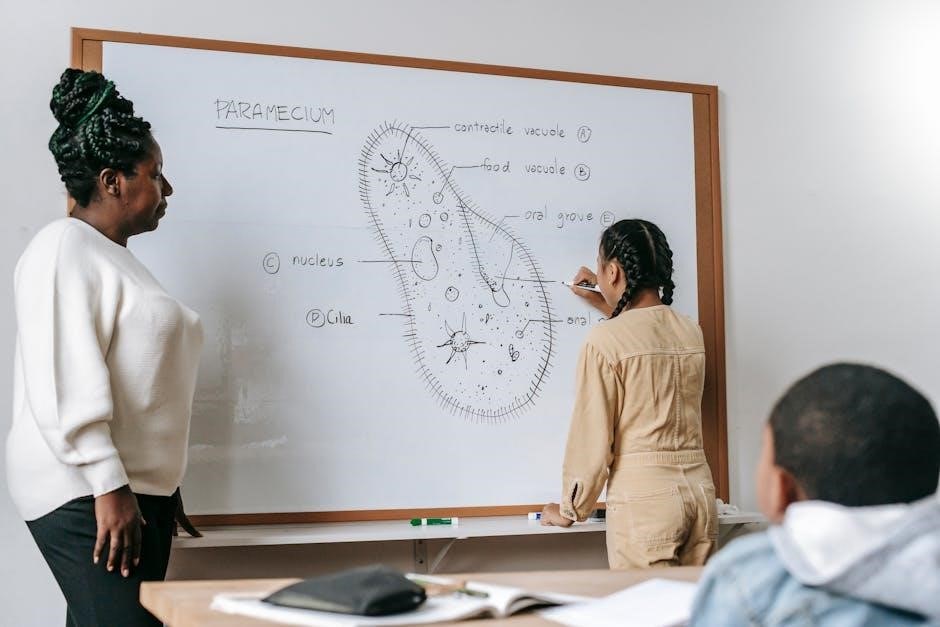
Cells are the fundamental units of life, exhibiting remarkable diversity in structure and function. A primary distinction lies between prokaryotic and eukaryotic cells. Prokaryotic cells, like bacteria, lack a nucleus and other membrane-bound organelles, while eukaryotic cells, found in plants, animals, fungi, and protists, possess these complex internal structures.
Key organelles include the nucleus (control center), mitochondria (energy production), ribosomes (protein synthesis), endoplasmic reticulum (transport and synthesis), Golgi apparatus (processing and packaging), and lysosomes (waste disposal).
Understanding the specific roles of each organelle is crucial for grasping cellular processes. Cell structure directly dictates function, enabling life’s complex operations.
A. Prokaryotic vs. Eukaryotic Cells
Prokaryotic cells, representing the earliest forms of life, are structurally simpler than their eukaryotic counterparts. They lack a true nucleus; their genetic material resides in a nucleoid region without a surrounding membrane. Prokaryotes also lack other membrane-bound organelles like mitochondria and endoplasmic reticulum.
Eukaryotic cells, found in plants, animals, fungi, and protists, are characterized by a true nucleus enclosing their DNA. They boast a complex internal organization with numerous membrane-bound organelles, each performing specialized functions.
This compartmentalization allows for greater efficiency and complexity in cellular processes. Size also differs significantly, with prokaryotes generally being smaller than eukaryotes.

B. Organelles and Their Functions (Detailed)
Nucleus: Controls cellular activities, housing DNA. Mitochondria: Powerhouses, generating ATP through cellular respiration. Ribosomes: Protein synthesis sites, found freely or on the endoplasmic reticulum.
Endoplasmic Reticulum (ER): Rough ER modifies and transports proteins; smooth ER synthesizes lipids and detoxifies. Golgi Apparatus: Processes and packages proteins and lipids for transport.
Lysosomes: Contain enzymes for intracellular digestion. Vacuoles: Storage and waste disposal. Chloroplasts (in plants): Site of photosynthesis. Cell Wall (in plants): Provides support and protection. Understanding each organelle’s specific role is crucial for grasping cellular function.
V. Cell Membrane & Transport
The cell membrane, a phospholipid bilayer with embedded proteins, regulates what enters and exits the cell. Passive transport, requiring no energy, includes diffusion – movement from high to low concentration – and osmosis, the diffusion of water.
Active transport, however, requires energy (ATP) to move substances against their concentration gradient. This often involves transport proteins acting as pumps. Consider facilitated diffusion, a type of passive transport aided by proteins.
Understanding these mechanisms is vital, as they govern nutrient uptake, waste removal, and maintaining cellular homeostasis. Membrane permeability and the role of channel proteins are also key concepts to review for the midterm.
A. Membrane Structure (Phospholipid Bilayer)
The cell membrane’s foundation is the phospholipid bilayer, a remarkable structure crucial for life. Phospholipids possess a hydrophilic (water-attracting) head and hydrophobic (water-repelling) tails.
These molecules arrange themselves in two layers, with tails facing inward, creating a barrier against water-soluble substances. Proteins are embedded within this bilayer, functioning as channels, carriers, or receptors.
Cholesterol also plays a role, modulating membrane fluidity across different temperatures. This fluid mosaic model isn’t rigid; components move laterally. Understanding this structure is fundamental to grasping how cells control transport and maintain internal environments.
B. Passive Transport (Diffusion, Osmosis)
Passive transport doesn’t require cellular energy expenditure; it relies on concentration gradients. Diffusion is the movement of molecules from an area of high concentration to low concentration, seeking equilibrium.
Osmosis, a specific type of diffusion, focuses on water movement across a semi-permeable membrane. Water travels from areas of high water potential (low solute concentration) to low water potential (high solute concentration).
Factors like temperature and molecule size influence these rates. Understanding tonic environments – hypotonic, hypertonic, and isotonic – is crucial for predicting water movement and cell behavior. These processes are vital for nutrient uptake and waste removal in cells.
C. Active Transport
Active transport requires energy, typically in the form of ATP, to move substances against their concentration gradients – from low to high concentration. This is essential for maintaining cellular imbalances necessary for function.
Protein pumps are key players, utilizing ATP to facilitate this movement. An example is the sodium-potassium pump, vital for nerve impulse transmission and maintaining cell volume. Endocytosis and exocytosis are bulk transport mechanisms.
Endocytosis brings substances into the cell via vesicle formation, while exocytosis releases substances from the cell. These processes are crucial for nutrient uptake, waste removal, and cell signaling, demonstrating energy-dependent cellular control.
VI. Cellular Respiration & Energy Production
Cellular respiration is the process by which cells break down glucose to generate ATP, the cell’s primary energy currency. This complex process occurs in several stages, beginning with glycolysis in the cytoplasm, yielding a small amount of ATP and pyruvate.
The Krebs cycle (Citric Acid Cycle) takes place in the mitochondrial matrix, further oxidizing pyruvate and releasing carbon dioxide, ATP, NADH, and FADH2. Finally, the electron transport chain, located in the inner mitochondrial membrane, utilizes these electron carriers to generate a substantial ATP yield.
Understanding the interconnectedness of these stages, and the role of oxygen as the final electron acceptor, is crucial. Respiration efficiently converts the chemical energy stored in glucose into usable cellular energy.
A. Glycolysis
Glycolysis, meaning “sugar splitting,” is the initial stage of cellular respiration, occurring in the cytoplasm and not requiring oxygen. This ten-step pathway breaks down one molecule of glucose (a six-carbon sugar) into two molecules of pyruvate (a three-carbon molecule).
The process involves an investment of two ATP molecules initially, but ultimately yields four ATP molecules, resulting in a net gain of two ATP. Glycolysis also produces two molecules of NADH, an electron carrier that will be used later in the electron transport chain.
Crucially, glycolysis doesn’t require mitochondria, making it a universal energy-producing pathway found in nearly all living organisms. Understanding the inputs and outputs of glycolysis is fundamental to grasping cellular respiration.

B. Krebs Cycle & Electron Transport Chain
Following glycolysis, the Krebs Cycle (Citric Acid Cycle) occurs in the mitochondrial matrix. Pyruvate is converted to Acetyl CoA, which enters the cycle, releasing carbon dioxide and generating ATP, NADH, and FADH2 – key electron carriers.
The Electron Transport Chain (ETC), located in the inner mitochondrial membrane, utilizes these electron carriers. Electrons are passed along a series of protein complexes, releasing energy used to pump protons (H+) across the membrane, creating a gradient.
This proton gradient drives ATP synthase, producing a large amount of ATP through oxidative phosphorylation. Oxygen serves as the final electron acceptor, forming water. The ETC generates approximately 32-34 ATP molecules per glucose, significantly more than glycolysis alone.
VII. Photosynthesis & Energy Conversion
Photosynthesis is the remarkable process by which plants and other organisms convert light energy into chemical energy in the form of glucose. This occurs within chloroplasts, utilizing chlorophyll to capture sunlight.
The process is divided into two main stages: Light-Dependent Reactions and the Calvin Cycle. Light-dependent reactions occur in the thylakoid membranes, converting light energy into ATP and NADPH. Water is split, releasing oxygen as a byproduct.
The Calvin Cycle, taking place in the stroma, uses the ATP and NADPH from the light-dependent reactions to fix carbon dioxide, ultimately producing glucose. This glucose serves as the primary energy source for the plant, fueling growth and other metabolic processes.
A. Light-Dependent Reactions
Light-dependent reactions, the first stage of photosynthesis, occur within the thylakoid membranes inside chloroplasts. These reactions capture light energy using chlorophyll and other pigments, initiating a cascade of events.
Water molecules (H2O) are split through a process called photolysis, releasing electrons, protons (H+), and oxygen (O2) as a byproduct. The released electrons move through an electron transport chain, generating ATP via chemiosmosis – a process similar to that in cellular respiration.
Simultaneously, light energy is used to reduce NADP+ to NADPH, another energy-carrying molecule. Both ATP and NADPH are crucial for powering the subsequent Calvin Cycle, where carbon dioxide is converted into glucose.
B. Calvin Cycle
The Calvin Cycle, also known as the light-independent reactions, takes place in the stroma of the chloroplasts. This cycle utilizes the ATP and NADPH generated during the light-dependent reactions to fix carbon dioxide (CO2) into organic molecules.
The cycle begins with carbon fixation, where CO2 combines with ribulose-1,5-bisphosphate (RuBP), catalyzed by the enzyme RuBisCO. This unstable six-carbon compound immediately breaks down into two molecules of 3-phosphoglycerate (3-PGA).
Through a series of reactions powered by ATP and NADPH, 3-PGA is converted into glyceraldehyde-3-phosphate (G3P). Some G3P is used to create glucose, while the rest regenerates RuBP, allowing the cycle to continue.
VIII. Cell Communication & Cell Cycle

Cell communication is vital for coordinating cellular activities. Signaling pathways involve reception, transduction, and response. Ligands bind to receptors, triggering intracellular cascades that ultimately alter cellular behavior.
The cell cycle consists of interphase (G1, S, G2 phases) and the mitotic (M) phase. Mitosis, including prophase, metaphase, anaphase, and telophase, ensures accurate chromosome segregation for growth and repair.
Meiosis, crucial for sexual reproduction, involves two rounds of division (Meiosis I & II) resulting in genetically diverse haploid gametes. Understanding the stages and significance of both mitosis and meiosis is essential for comprehending heredity and organismal development.
A. Cell Signaling Pathways
Cell signaling pathways are the mechanisms by which cells receive, process, and respond to external cues. These pathways typically involve three key steps: reception, transduction, and response.
Reception occurs when a signaling molecule (ligand) binds to a specific receptor protein, often located on the cell surface. This binding initiates a conformational change in the receptor.
Transduction involves a series of relay proteins that amplify and transmit the signal, often through phosphorylation cascades. Second messengers like cAMP can also participate.
Finally, the response is the cellular change triggered by the signaling pathway, which could include altered gene expression, enzyme activity, or cellular metabolism. Understanding these pathways is crucial for comprehending complex biological processes.
B. Mitosis & Meiosis: Stages and Significance
Mitosis is a type of cell division resulting in two identical daughter cells, essential for growth and repair. Its stages – prophase, metaphase, anaphase, and telophase – ensure accurate chromosome segregation.
Meiosis, conversely, produces four genetically diverse haploid cells (gametes) crucial for sexual reproduction. It involves two rounds of division: Meiosis I and Meiosis II.

Meiosis I separates homologous chromosomes, creating genetic variation through crossing over and independent assortment. Meiosis II separates sister chromatids, similar to mitosis.
The significance lies in maintaining chromosome number across generations (mitosis) and generating genetic diversity (meiosis), driving evolution and adaptation. Understanding these processes is fundamental to genetics.